Blog, Wholesale Guide
Tips to Boost Souvenir Revenue by 20 Percent in Las Palmas
“Boost Souvenir Revenue” in Las Palmas is not just a sales question; it is actually a puzzle of optimizing tourist consumer behavior. In Las Palmas, where the flow of tourists fluctuates by season, increasing the number of products per order (basket size) is the key to raising revenue without needing more foot traffic.
Furthermore, most souvenir shops are missing this chance because they focus on “selling each product” instead of “designing a shopping experience.” With over 20 years of experience in the souvenir business, I will share with you in this article how to boost souvenir revenue by 20 % through display strategies, psychology, and product structure.
1. Bundle Souvenirs into Attractive Gift Sets

One of the most effective ways to solve the puzzle of how to sell more souvenirs in Las Palmas is to change the way you sell: from selling individual items to selling themed sets.
In reality, tourists usually do not want to waste time picking out each small item. They need a fast, clear solution that is easy to decide on. When products are packed into sets, the selection process is significantly shortened.
For example, instead of displaying coasters, trays, and bowls separately, you can combine them into a “Beach Gift Set.” At that point, the customer stops thinking about “what to buy” and shifts to “should I buy this set.” This change helps increase the conversion rate clearly.
Furthermore, combo prices should be designed about 10–15% lower than the total individual prices. This difference is enough to create a “better deal” feeling while still ensuring profit margins.
Another benefit is that bundling helps you manage inventory better. Slow-selling products can be combined with best-sellers to create a more attractive new set.
Additionally, naming each set is very important. Names like “Natural Living Set” or “Island Gift Collection” help increase perceived value and give the products more of a story.
2. Use Smart Product Placement to Trigger Impulse Buying
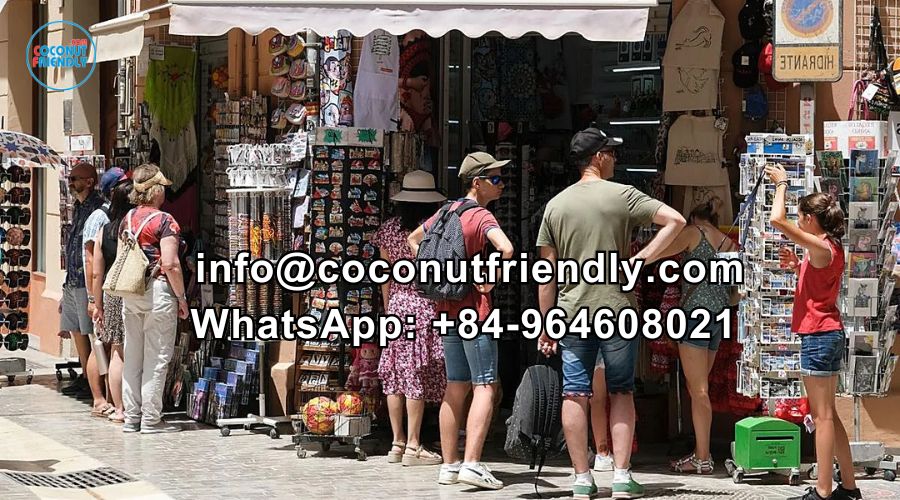
The way you display products directly affects buying behavior. In the souvenir industry, most buying decisions are quick and unplanned.
Customers walking into a shop often do not know what they will buy. They only start paying attention when they see products placed in the right spots and within easy reach.
Small, low-priced products should be placed near the checkout counter. This is the area where customers stand waiting and tend to look around. If the product is attractive enough, they will easily add it to their basket without much thought.
Moreover, best-selling products should be placed in the center area or at eye level. This is the “golden” zone in displays, where the ability to attract is highest.
Another important factor is how you group products. When products are arranged by themes like “island,” “nature,” or “handcrafted,” customers will easily pick many items at once instead of buying bits and pieces.
Additionally, lighting and display spacing also affect the buying decision. An area that is too cramped or messy will make it hard for customers to focus and reduce the chance of them buying more.
3. Offer Add-On Items at Checkout
The checkout counter is the place with the highest “upsell” rate in the entire shop. Once customers have decided to buy, they are less likely to refuse small suggestions.
However, the important thing is that the add-on product must fit the customer’s state of mind at that moment. They do not want to think much, so the product needs to be simple, easy to understand, and low-priced.
Some effective product groups:
-
Keychains
-
Small coasters
-
Mini accessories
-
Symbolic gifts
Furthermore, the way staff communicate also has a big impact. A gentle question like “Would you like to add a small gift?” is often much more effective than trying to upsell in a stiff way.
One point to note is not to offer too many choices at the checkout. When customers have to think too much, they tend to say no.
Therefore, you should limit it to the 3–5 best add-on products and display them clearly. This helps increase the add-on rate without making the customer feel pressured.
4. Tell the Story Behind Each Souvenir
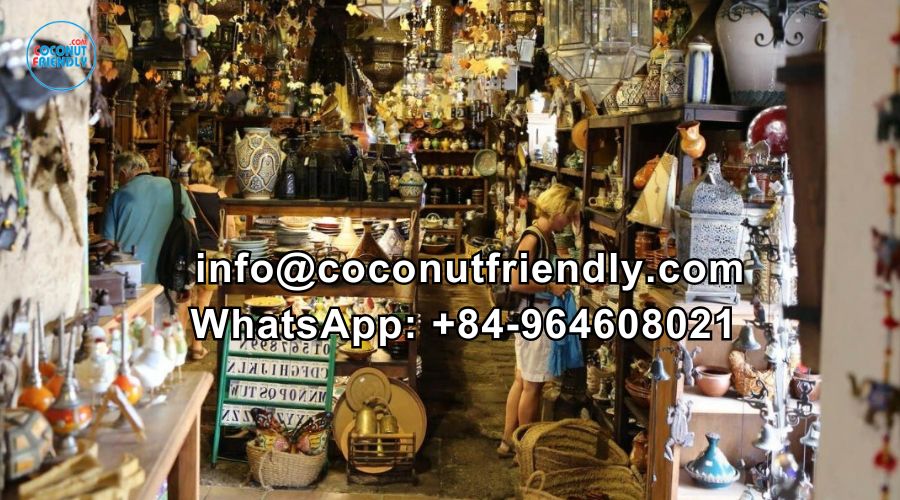
Products without a story will find it very hard to compete in today’s market. Tourists do not just buy objects; they buy emotions and experiences.
A product made from coconut shells becomes more valuable when the customer understands it is handcrafted, eco-friendly, and tied to local life.
Furthermore, storytelling helps increase “perceived value” without changing production costs. This is one of the most effective ways to increase profit.
The story can be told in many ways:
-
Short description boards
-
Product labels
-
Direct advice from staff
Additionally, linking the product to the experience in Las Palmas is also very important. When customers feel the product represents their trip, the chance of buying will increase significantly.
A shop that knows how to tell a good story usually has higher revenue even when selling the same type of products as competitors.
5. Train Staff to Upsell and Cross-Sell Naturally
Staff are not just sellers; they are the ones who guide the customer’s buying decision.
Tourists often do not know what to buy or how much. If staff know how to suggest correctly, they can significantly increase the number of products per order.
For example, when a customer picks a tray, the staff can suggest matching coasters. When a customer buys gifts, staff can ask about the purpose to suggest more suitable products.
Moreover, it is important that the approach is natural. If customers feel forced to buy, they will react negatively.
An effective rule is:
→ suggest based on needs, not based on the product you want to sell.
Additionally, staff training should focus on:
-
Understanding the product
-
Understanding the customer
- Simple communication skills
A good sales team can make a big difference even if the products remain the same.
6. Focus on Practical, Easy-to-Carry Souvenirs
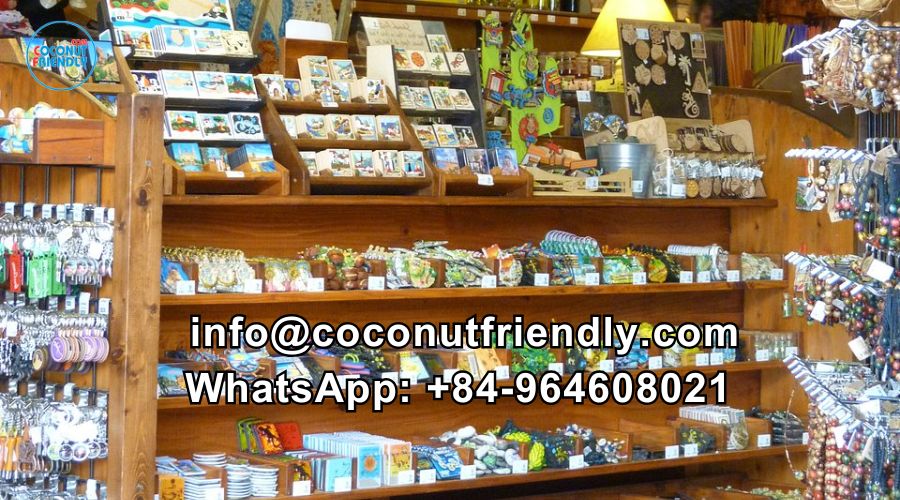
One of the biggest barriers preventing customers from buying more is the luggage issue. When suitcases are limited, customers will weigh their options very carefully before buying.
Therefore, the lighter and smaller a product is, the easier it is to sell more.
Furthermore, products that can be used every day will have a big advantage. Customers do not want to buy items just for display and then forget about them.
For example, bowls, trays, coasters, or small decor can be used in daily life. This helps customers feel that the purchase is more reasonable.
In contrast, large, heavy, or fragile products often make customers hesitate. Even if they like them, they might still give them up due to shipping concerns.
Thus, when building a product catalog, the “easy to carry” criterion should be placed alongside the design factor.
7. Create Limited-Time Offers to Increase Basket Size
The “fear of missing out” psychology is one of the strongest factors in retail. When customers feel the opportunity is limited, they will decide faster.
Programs like “buy 2 get a discount” or “combo deals” give customers motivation to buy more to optimize costs.
Moreover, limiting time or quantity helps increase the sense of urgency. This is especially effective in a tourist environment, where customers do not have much time to come back.
However, offers need to be designed reasonably. If you discount too much, you will affect profits. If it is not attractive enough, customers will not care.
One effective way is to combine offers with product bundles. This both increases the number of sales and keeps the product value.
Summary Table of Strategies to Increase Revenue
| Strategy | Main Impact | Influence on Customer Behavior |
| Product bundles | Increases quantity bought | Reduces decision time |
| Smart display | Increases impulse buying | Attracts attention |
| Checkout add-ons | Increases order value | Taps into willingness to spend |
| Storytelling | Increases perceived value | Creates emotional connection |
| Staff upsell | Increases additional buying | Guides choices |
| Convenient products | Increases ability to buy more | Reduces luggage barriers |
| Limited offers | Increases quick decisions | Stimulates buying behavior |
 Conclusion
 Conclusion
To thoroughly solve the puzzle of how to sell more souvenirs in Las Palmas, shops should not just focus on products but need to design the entire shopping experience.
An effective system is a combination of the right products, proper display, and subtle sales strategies.
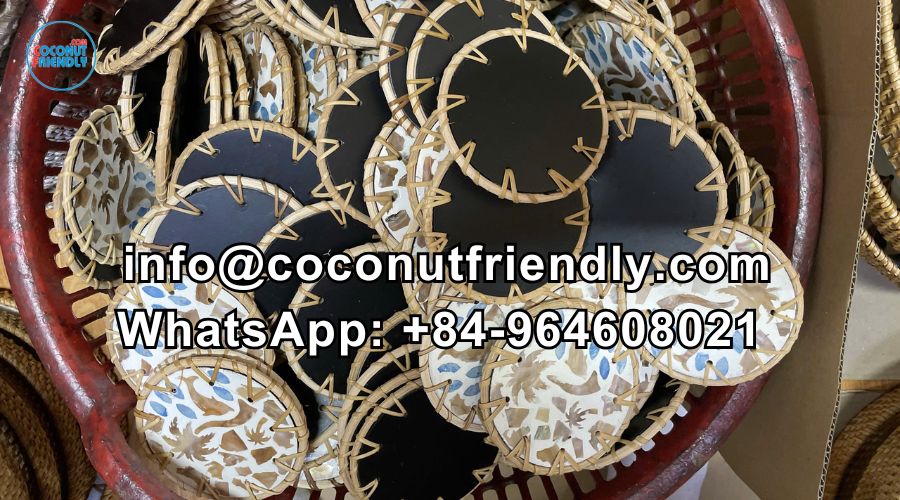
In that context, manufacturers with product development capabilities like Coconut Friendly play an important role. Not only providing goods, they also help retailers build product catalogs according to trends, design optimal product sets, and create a difference in the market.
Thanks to R&D capabilities, shops can actively lead trends instead of following the market, thereby achieving sustainable growth in the souvenir industry.
Contact us via:
- WhatsApp / Viber / Zalo: +84 964 608 021 (Available 24/7 for global inquiries)
- Email: info@coconutfriendly.com (Response within 12-24 business hours)
- Head Office: 250/19 Khuong Trung Street, Thanh Xuan District, Hanoi City, Vietnam