

Engraved coconut bowl products have officially become the key branding tool for global green enterprises in 2026. With over 20 years of experience in handicraft exports, I have observed that a finely processed logo is not just an aesthetic element; it is a testament to a company’s quality.
However, choosing between laser engraving and printing often leaves many buyers undecided. At Coconut Friendly, we prioritize absolute safety, regardless of which personalization method you choose.
In this article, we will take a deep dive into the R&D process behind laser precision, safe food-grade printing techniques, and the strict QC standards that protect your brand’s reputation.
1. Choosing Your Branding Method: Laser Engraving or Printing?
In the eco-friendly tableware market, every branding method has its own advantages. The most important factor is not the method itself, but the process behind it. At Coconut Friendly, we are committed to technical control to eliminate the risks often found in low-quality products on the market.
Technical Comparison: Laser Engraving vs. Specialized Printing
| Feature | Engraved Coconut Bowl | Printed Coconut Bowl (Standard Process) |
| Durability | Permanent; will not peel or fade. | Colorfast if processed with the correct procedure. |
| Food Safety | 100% Safe (No chemicals used). | Dependent on ink type and protective coating. |
| Aesthetics | Luxurious, rustic, 3D depth. | Diverse colors, reflects exact brand identity. |
| Risks if mismanaged | Excessive laser heat weakens shell structure. | Ink peeling or chemical leaching. |
Printing methods only become “sensitive” when the production process is cut short or lacks care. Many suppliers use cheap industrial inks or skip the food-grade top-coat protection step. This leads to the risk of ink peeling after a few washes or, worse, chemical leaching into hot food.
At Coconut Friendly, if a client chooses the printing method, we apply a heat-curing process and use high-end specialized inks. However, for brands that prioritize a rustic feel and “eternal” durability, the engraved coconut bowl remains the premier solution due to its zero-additive nature and absolute longevity over time.
2. The R&D Behind a Perfect Laser Etch
Engraving on an organic material with a natural curve like a coconut shell is a technical challenge. The R&D team at Coconut Friendly has spent years optimizing “Cold Laser” technology.
Every coconut shell has a different fiber density. If the laser intensity is too high, the shell will burn deeply, leading to cracks; if it is too weak, the logo will appear faint. We set specific parameters for each batch to ensure a sharp etch while maintaining the shell’s structural integrity.
This precision ensures our products do not deform when shipped to countries with dry, cold climates like Europe or North America.

3. Selecting “Aged” Shells: The Foundation of Quality
A high-class engraved coconut bowl starts with the selection of raw materials. We exclusively use aged (dried) coconut shells from the Ben Tre region, where shell thickness is superior.
Why does the age of the coconut matter? Aged shells have a dense wood-like texture, allowing the laser to create deep, dark etches without burning through the surface. Young or thin shells are rejected from the start because they are prone to hairline fractures when exposed to heat from lasers or printing processes. By choosing the right material, we create a solid “canvas” for your brand.
4. QC: The “Tap Test” and Natural Seasoning
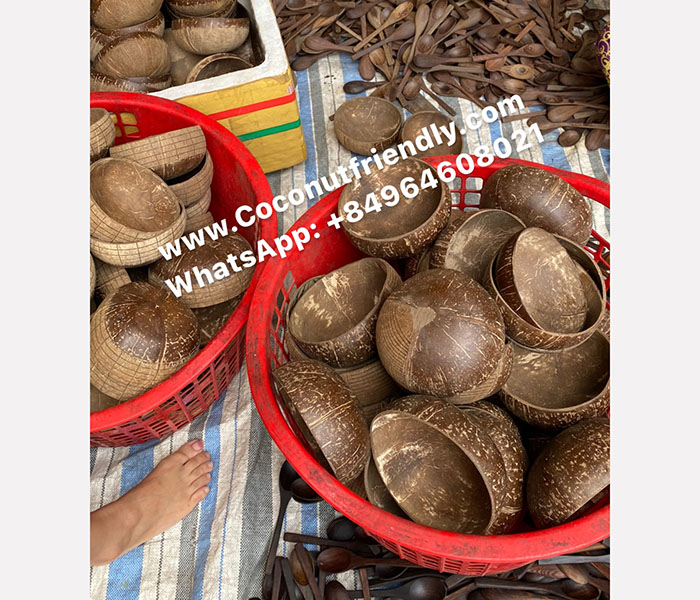
Quality Control (QC) at Coconut Friendly is a blend of artisan experience and export standards. The most effective method is the “Tap Test”: an artisan taps each raw shell; a clear, metallic ring proves the shell is solid and free of internal cracks.
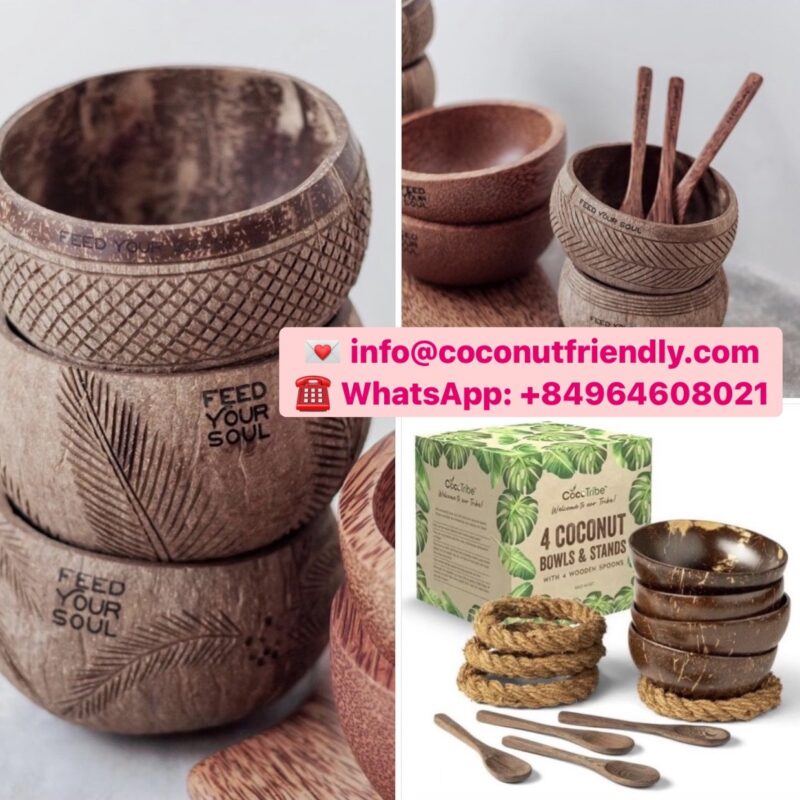
After the logo is etched, the burnt area often appears dry or ashy. We finish the product with a final seasoning step: hand-rubbing each bowl with organic virgin coconut oil. This step not only makes the logo “pop” with a luxurious contrast but also deeply hydrates the fibers, preventing cracks during storage. We understand that your brand’s professionalism lies in the perfect appearance of the logo.
5. Design Tips for Your Custom Logo
Designing for the curved surface of a coconut shell requires its own set of rules. The Coconut Friendly consulting team always recommends:
-
Bold Strokes: Bold fonts and clean lines display better than overly fine details.
-
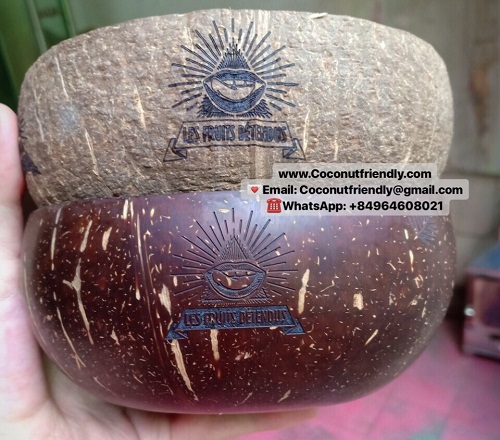
The “Golden” Position: Placing the logo about 2-3cm below the rim ensures brand recognition stands out in every food photography frame.
-
Scale Consistency: We adjust the logo size relative to each bowl’s dimensions, ensuring consistent aesthetic appeal across your entire wholesale order.
6. Logistics: Plastic-Free Packaging for the Global Market
Exporting handicrafts internationally requires an understanding of moisture levels. At Coconut Friendly, we kiln-dry our products to a precise 12% moisture standard to prevent mold and satisfy strict international phytosanitary requirements.
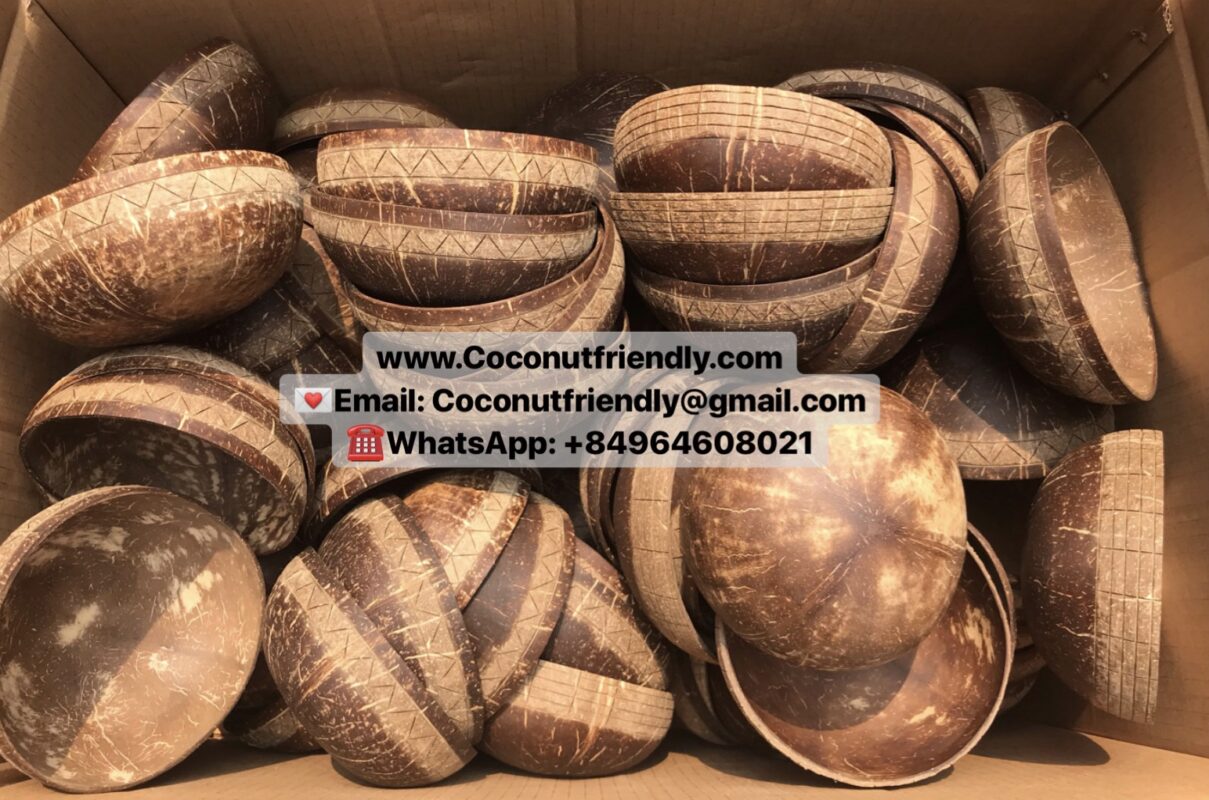
We are committed to using 100% plastic-free packaging, from recycled honeycomb paper to starch-based tape. Our packaging team implements a scientific “nesting” technique to optimize container space, helping customers save on shipping costs while ensuring the logos remain scratch-free during the long journey.
7. Conclusion: Invest in Sustainable Credibility
An engraved coconut bowl is more than just tableware; it is your commitment to the environment. At Coconut Friendly, with 20 years of experience and a systematic R&D process, we help you realize those values perfectly.
Whether you choose permanent laser engraving or colorful printing, we guarantee a careful and safe processing procedure. Let us accompany you on the journey to replace plastic with exquisite handcrafted beauty. Contact our team today to receive a sample and start building a green legacy for your own brand.