

Blog, Retail Tips
Scarcity Marketing for Retail: How to Close Sales Faster
Scarcity Marketing for Retail is one of the most powerful—yet often misunderstood—strategies in souvenir retail. When applied correctly, scarcity does not pressure customers. Instead, it clarifies value, highlights craftsmanship, and helps buyers make confident decisions before opportunities disappear.
In tourist-driven retail environments, customers rarely return. Consequently, every visit represents a single, fleeting chance to convert interest into purchase. This is exactly where scarcity marketing becomes essential rather than optional.
Moreover, for handcrafted souvenirs made from premium materials such as mother of pearl, scarcity already exists naturally. The role of the retailer is not to fabricate urgency, but to communicate it honestly and strategically.
This article explores how souvenir shops can apply Scarcity Marketing for Retail in a professional, ethical, and highly effective way—while protecting brand trust and increasing conversion speed.
1. What Is Scarcity Marketing for Retail?
Scarcity marketing for retail is the practice of increasing perceived value by emphasizing limited availability, uniqueness, or time constraints. Fundamentally, it is rooted in consumer psychology—people desire what feels rare, exclusive, or fleeting.
However, true scarcity marketing is not about manipulation. Instead, it is about visibility. Specifically, it helps customers understand what they might lose by waiting too long. In retail, hesitation often kills purchases more than price.
Furthermore, research published in the Journal of Consumer Research shows that perceived scarcity increases desirability because it signals higher value and social distinction. Consequently, shoppers become more decisive when they believe availability is limited.
In handcrafted souvenir retail, scarcity is structural rather than artificial. Artisan capacity is finite, materials vary naturally, and production timelines are long. Therefore, scarcity marketing for retail simply makes this reality clear to customers.
2. Why Does Scarcity Marketing Work So Well for Souvenirs?
Scarcity marketing for retail is especially effective in souvenir shops because tourism amplifies emotional urgency. Travelers operate under time pressure, emotional attachment, and a strong sense of “now or never.”
Fear of missing out (FOMO) plays a central role. Tourists often think, “If I don’t buy this now, I’ll never find it again.” Consequently, scarcity transforms casual browsing into purposeful decision-making.
Moreover, souvenirs are not utilitarian purchases. They represent memories, identity, and cultural connection. Therefore, when an item is positioned as exclusive or one-of-a-kind, its emotional value increases significantly.
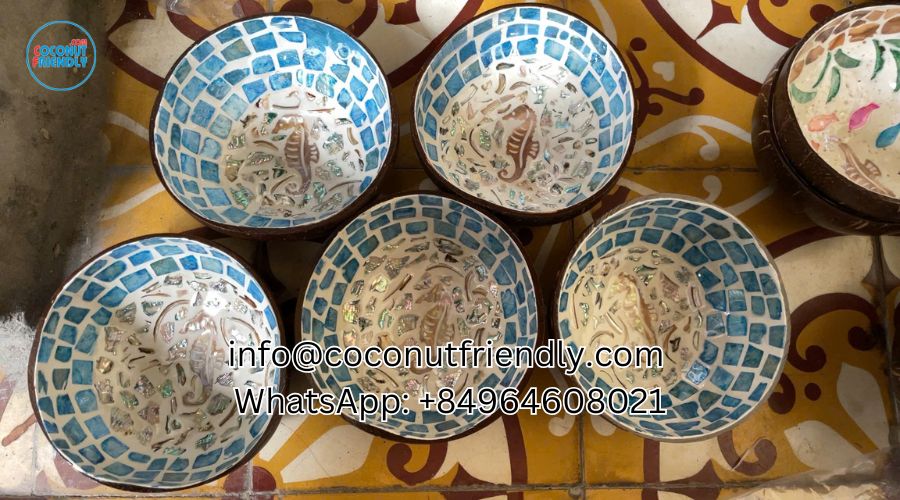
Handcrafted souvenirs—particularly handmade mother of pearl items—naturally support scarcity narratives. Shell patterns are organic and unpredictable, and artisan techniques introduce subtle variation. No two pieces are ever truly identical.
As a result, scarcity marketing aligns seamlessly with consumer expectations in souvenir retail rather than feeling like a sales trick.
Learn about: Handling Price Objections in Retail: Stop Discounting
3. Three Practical Ways to Create Scarcity for Handicraft Products
Scarcity marketing for retail must be grounded in truth, especially when targeting quality-conscious travelers. Below are three ethical, proven methods suitable for handcrafted souvenirs.
3.1 The “Unique Piece” Strategy
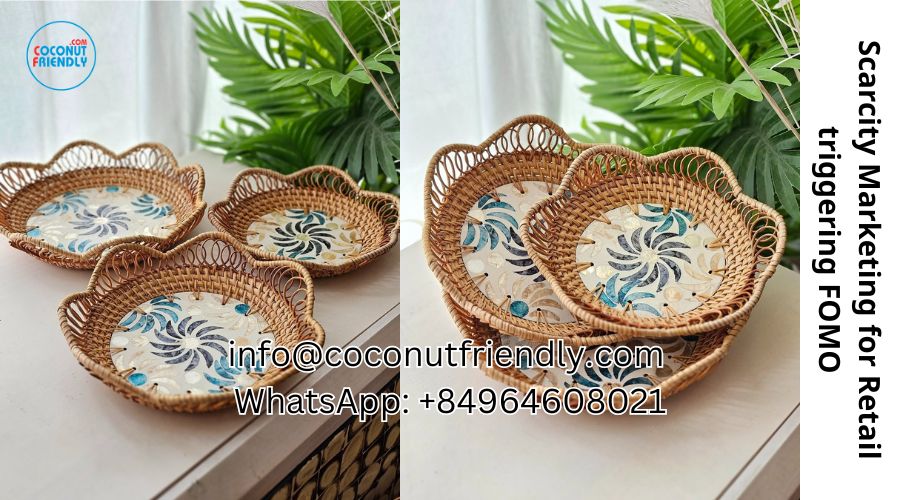
This strategy emphasizes individuality rather than quantity. With mother of pearl inlay, natural shell patterns guarantee that each item has its own visual signature.
Instead of stating limited numbers, retailers can highlight irreproducibility. For example: “This pattern will never appear the same again.” This frames scarcity as artistic uniqueness.
Furthermore, customers tend to value uniqueness more than numerical limits. Consequently, this approach strengthens emotional attachment without invoking pressure.
Read next: Upselling in Retail: How to Increase Your Souvenir Shop Revenue
3.2 Limited Batch Production
Limited batch production is one of the most credible scarcity tactics in retail. It relies on real production constraints rather than artificial countdowns.
Mother of pearl inlay requires precision cutting, hand placement, and layered polishing. Therefore, artisans can only complete a small number of pieces each month without compromising quality.
When retailers explain this process clearly, customers understand that scarcity exists to protect craftsmanship. As a result, urgency feels justified rather than manipulative.
3.3 Time-Limited Displays and Seasonal Collections
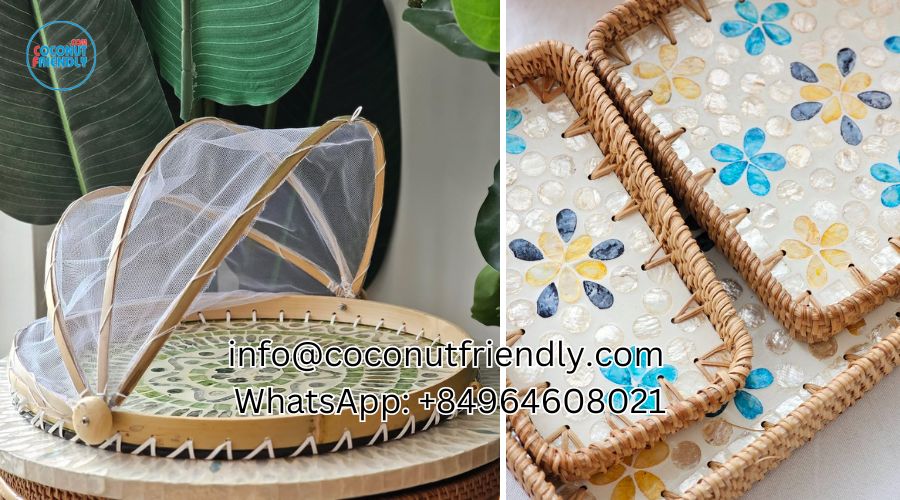
Time-based scarcity works particularly well in tourist retail environments. Seasonal collections or rotating displays introduce urgency without relying on stock claims.
For example, labeling a display as a “Seasonal Design” or “Limited Display Period” signals temporal exclusivity. Consequently, customers recognize that delaying means missing out.
Additionally, rotating collections keeps the shop experience fresh while reinforcing the idea that not everything is always available.
4. Practical Scarcity Marketing Sales Scripts for Your Staff
Scarcity strategies only succeed when staff communicate them naturally. Therefore, language must remain factual, calm, and respectful.
Effective scripts include:
-
“This is the last piece with this exact shell pattern.”
-
“Each item is handcrafted individually, so this design cannot be repeated.”
-
“This collection will be replaced next month.”
These statements work because they describe reality rather than applying pressure. Consequently, customers feel informed instead of rushed.
According to the National Retail Federation, urgency-driven messaging improves conversion when paired with transparency and product education.
Related post: 7 Souvenir Marketing Tips to Make Customers Buy in Seconds
5. Avoiding Fake Scarcity: How to Maintain Customer Trust
Fake scarcity is one of the most damaging practices in retail. Repeated claims like “last one” that are clearly untrue erode credibility quickly.
Scarcity marketing for retail must reflect actual limitations. Otherwise, customers feel misled, and long-term trust deteriorates.
Instead, retailers should focus on real constraints: artisan capacity, material variation, production time, and seasonal design cycles. These factors are honest and defensible.
In premium souvenir retail, trust is a core value. Customers expect authenticity, not urgency theater. Therefore, ethical scarcity always outperforms fabricated pressure.
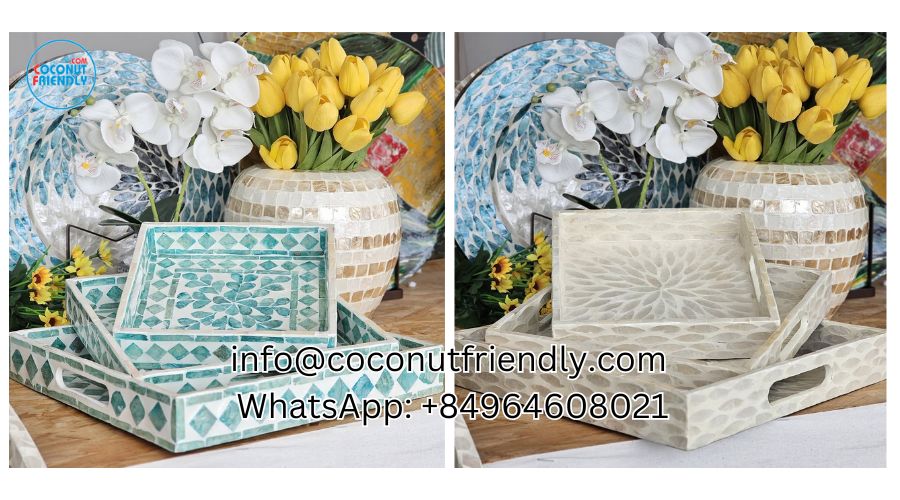
Get in touch with us today to discover our full range of products or to discuss wholesale opportunities. We look forward to a successful partnership!
- Coconut Friendly
- Email: info@coconutfriendly.com
- Tel/WhatsApp: +84 964 608 021
Explore our Products Collection for more choices!
