

Blog, Retail Tips
Price Competition in Retail: How to Win Without Lowering Prices
Price Competition in Retail is the daily reality for souvenir shops operating in crowded tourist zones where dozens of stores sell visually similar products. When customers walk in already comparing prices, negotiation becomes almost automatic. Consequently, many shop owners feel trapped between lowering prices or losing the sale.
However, customers rarely push prices down because they want to save a few dollars. In reality, they negotiate because they feel unsure about value. When products look similar and explanations are weak, price becomes the only visible difference. Therefore, the real problem is not competition, but positioning.
This article focuses on how retail shops can escape price pressure without discounts, especially when surrounded by competitors selling comparable handicraft items. The strategies shared here are practical, psychological, and immediately applicable.
1. The Trap of Price Competition in Retail
Price Competition in Retail becomes dangerous when shop owners respond emotionally instead of strategically. Lowering prices feels like a quick fix, but it silently damages the business from the inside. Each discount trains customers to believe your products are negotiable rather than valuable.
Moreover, once you enter a price war, competitors can always go lower. Larger shops have better purchasing power, while mass-produced items allow thinner margins. Consequently, independent souvenir shops slowly lose profitability while working harder for less return.
From a psychological perspective, constant discounting reduces perceived quality. Research from Harvard Business Review confirms that consumers associate price reductions with lower craftsmanship and reduced durability. As a result, even loyal customers begin questioning authenticity.
Ultimately, price competition does not attract better customers. It attracts more aggressive negotiators. Escaping this trap requires changing how customers evaluate your products, not how much they cost.
View more: How to Display Mother of Pearl Souvenirs to Attract Tourists
2. Differentiation Is the Only Real Protection Against Price Pressure
Differentiation strategy is the strongest shield against customer bargaining. When a product feels unique, customers cannot easily compare prices. Without comparison, negotiation loses its foundation. Therefore, differentiation immediately weakens price pressure.
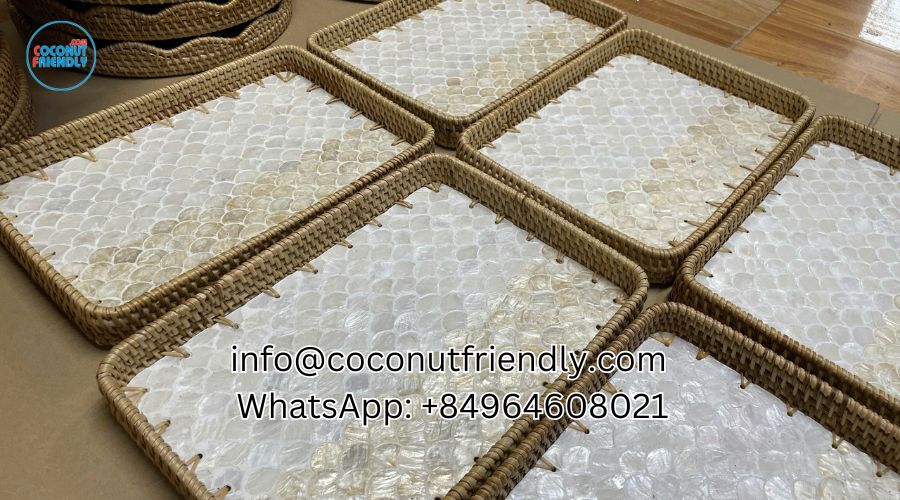
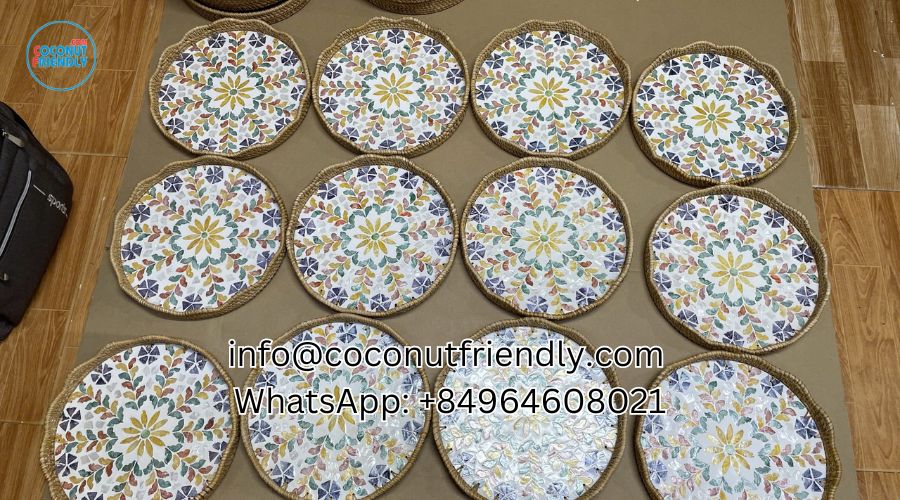
In souvenir shop competition, differentiation often comes from design exclusivity. When patterns, materials, or finishes are unavailable next door, customers stop referencing other shops. Authentic mother of pearl thickness, lacquer depth, and handcrafted imperfections become advantages rather than flaws.
Equally important is consistency. Shops that clearly communicate standards—such as artisan selection, material grading, and quality control—project confidence. Consequently, customers feel they are buying from a specialist, not a reseller.
At Coconut Friendly, years of R&D and strict QC processes support this differentiation. However, the key lesson applies to any shop: when products feel intentionally curated, customers hesitate to negotiate because the value feels justified.
Learn more: Storytelling in Retail: Elevating Your Handicraft Souvenir Sales
3. Standing Out When Everyone Sells Similar Products
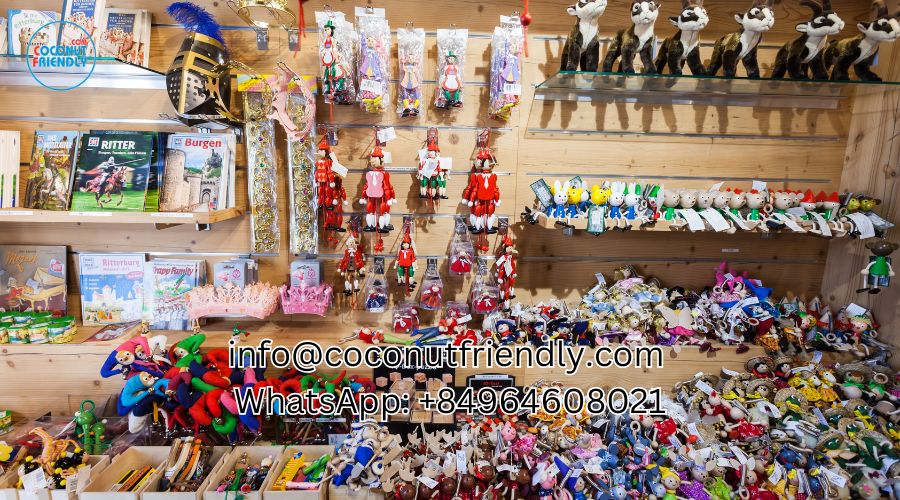
When shops sell similar categories, storytelling becomes the first layer of differentiation. Selling an object alone invites price comparison. Selling the story behind artisan craftsmanship shifts attention to meaning and heritage. According to Nielsen, consumers are significantly more willing to pay premium prices when emotional value is present.
The second layer is in-store experience. Lighting, spacing, and presentation shape perceived quality before a single word is spoken. Warm lighting enhances shell depth, while uncluttered displays signal exclusivity. Consequently, products appear more refined and less negotiable.
The third layer lies in value-added services. Free gift wrapping, personalization options, or clear care instructions increase perceived completeness. Customers feel they are receiving more than just a product, which weakens their urge to bargain.
When these three elements work together, price becomes a secondary consideration. Customers stop asking “Can you lower the price?” and start asking “Is this the best version I can get?”
4. How to Respond When Customers Say “The Shop Next Door Is Cheaper”
This statement is one of the most critical moments in the sales process. Responding defensively reinforces price competition. Responding calmly with expertise reframes the discussion entirely.
Acknowledging the customer’s concern shows respect, but immediately redirecting attention to tangible quality differences shifts focus. Explaining shell thickness, lacquer smoothness, and finishing techniques transforms the conversation from price to craftsmanship.
Psychologically, customers feel safer when sellers educate rather than persuade. Consequently, trust replaces suspicion. According to the National Retail Federation, informed selling significantly increases customer confidence and reduces negotiation intensity.
Handled correctly, this objection becomes an opportunity. Instead of losing control of pricing, the seller establishes authority, making price discussion feel unnecessary.
Explore more: Handling Price Objections in Retail: Stop Discounting

5. Winning Without Discounts Through Value-Based Pricing
Value-based pricing is the long-term solution to Price Competition in Retail. Instead of reacting to competitors, pricing reflects craftsmanship depth, exclusivity, and emotional value. When customers understand what they are paying for, price resistance decreases naturally.
According to McKinsey, businesses using value-based pricing achieve higher margins and stronger brand loyalty than those relying on price matching. In souvenir retail, this approach is especially powerful because handmade products already carry intrinsic uniqueness.
Value-based pricing works only when supported by consistency. Clear storytelling, visible craftsmanship, and professional presentation must align. Otherwise, customers sense a mismatch and push prices down.
At Coconut Friendly, pricing reflects artisan experience, controlled sourcing, and design development. This alignment allows customers to accept prices confidently, without feeling the need to negotiate.
Comparison Table: Retail Pricing Approaches and Outcomes
| Pricing Approach | Customer Behavior | Business Impact |
|---|---|---|
| Price-led selling | Aggressive bargaining | Margin erosion |
| Discount-driven retail | Low loyalty | Brand weakening |
| Value-based pricing | Trust and confidence | Stable profitability |
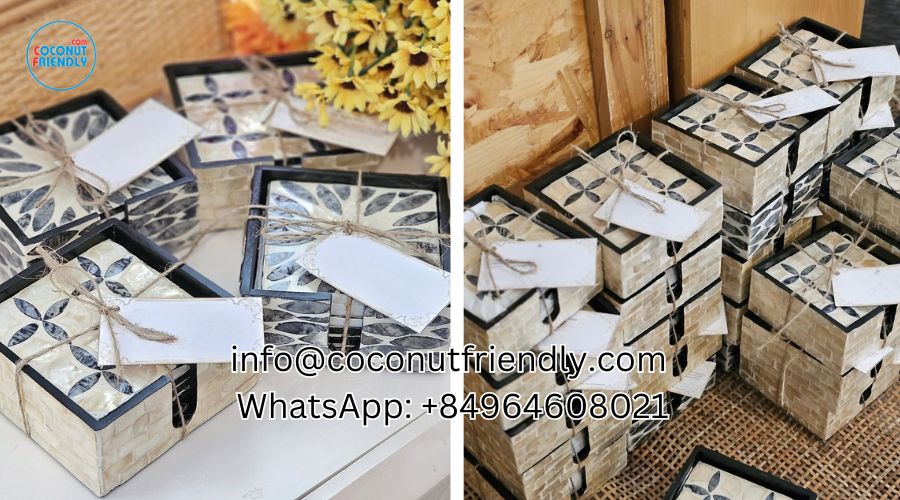
Get in touch with us today to discover our full range of products or to discuss wholesale opportunities. We look forward to a successful partnership!
- Coconut Friendly
- Email: info@coconutfriendly.com
- Tel/WhatsApp: +84 964 608 021
Explore our Products Collection for more choices!
