

Blog, Wholesale Guide
How to Store Mother of Pearl Souvenirs in Bulk Orders
Storing Mother of Pearl in bulk is not simply a logistical task—it is a strategic process that directly determines whether your wholesale souvenirs arrive at retail shelves looking premium or prematurely aged. For B2B buyers handling hundreds or thousands of shell-inlay items, improper storage silently erodes product value long before the first sale happens.
Furthermore, in highly competitive souvenir markets, damaged lustre, yellowing nacre, or micro-cracks caused by poor warehouse handling often lead to price pressure, returns, or forced discounting. Consequently, mastering bulk storage is no longer optional—it is a core profit-protection skill.
1. The “Breathable Padding” Rule: Choosing the Right Packing Materials
Storing Mother of Pearl in bulk begins with understanding one essential truth: nacre is a living organic material. Although it looks rigid and polished, it continues to react to its surrounding environment long after production. Therefore, sealing it too tightly becomes a hidden risk.
Many wholesale buyers mistakenly rely on shrink wrap or fully sealed plastic bags, assuming airtight protection is ideal. However, in bulk storage conditions, sealed plastic traps micro-moisture released from the shell itself. Consequently, this creates localized humidity that leads to yellowing, dull surfaces, or adhesive fatigue in shell inlay products.
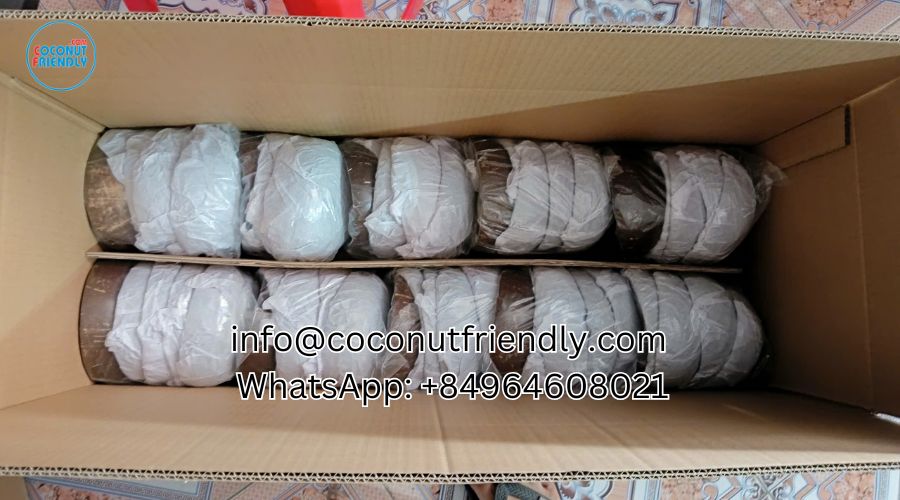
At Coconut Friendly, our QC teams consistently recommend kraft paper, non-woven fabric, or breathable padding layers between each product. These materials allow gentle air circulation while still preventing dust and friction. Moreover, they significantly reduce condensation risks during long-term warehouse storage.
From a wholesale souvenir storage perspective, this breathable approach stabilizes nacre over time. Specifically, it protects bulk nacre products from the “suffocation effect” that causes surface haze—one of the most common complaints from B2B buyers after long storage cycles.
2. Staggered Stacking: Preventing Structural Fatigue in Large Crates
Once materials are chosen correctly, the next major risk in storing Mother of Pearl in bulk is vertical pressure. In wholesale logistics, weight accumulation is silent but destructive.
When bulk orders are stacked uniformly without load distribution, the bottom layers absorb compounded pressure. Over time, this pressure transfers stress into the shell inlay joints, particularly around curved edges and thin nacre cuts. Consequently, micro-fractures appear—not immediately visible, but fatal for long-term durability.
The staggered stacking method solves this problem effectively. By alternating product orientation and inserting intermediate padding sheets, weight disperses evenly across the crate. In addition, rigid separators prevent direct shell-to-shell contact, reducing friction damage during handling.
From a B2B inventory management for MOP standpoint, this technique dramatically reduces structural fatigue during long storage or overseas shipping delays. At Coconut Friendly, this method is standard practice in all export crates exceeding 25 kg.

3. Strategic Palletization: Keeping Bulk Orders Off the Ground
Warehouse placement is one of the most underestimated aspects of storing Mother of Pearl in bulk. Many buyers focus on packaging but neglect environmental exposure from floors and walls.
Concrete floors naturally emit moisture, especially in tropical or coastal regions. Consequently, crates placed directly on the ground absorb humidity from below, even in climate-controlled warehouses. This moisture migrates upward, attacking the adhesive layers beneath the nacre.
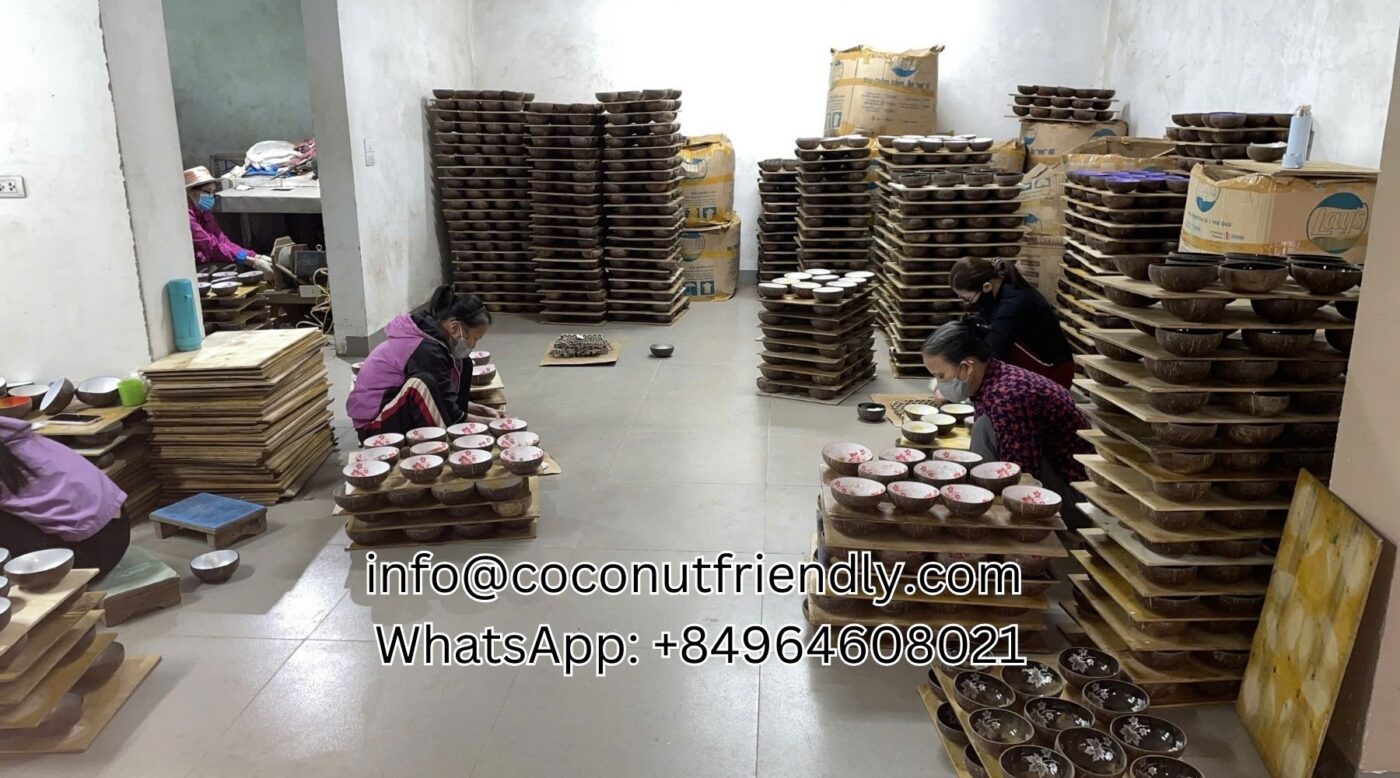
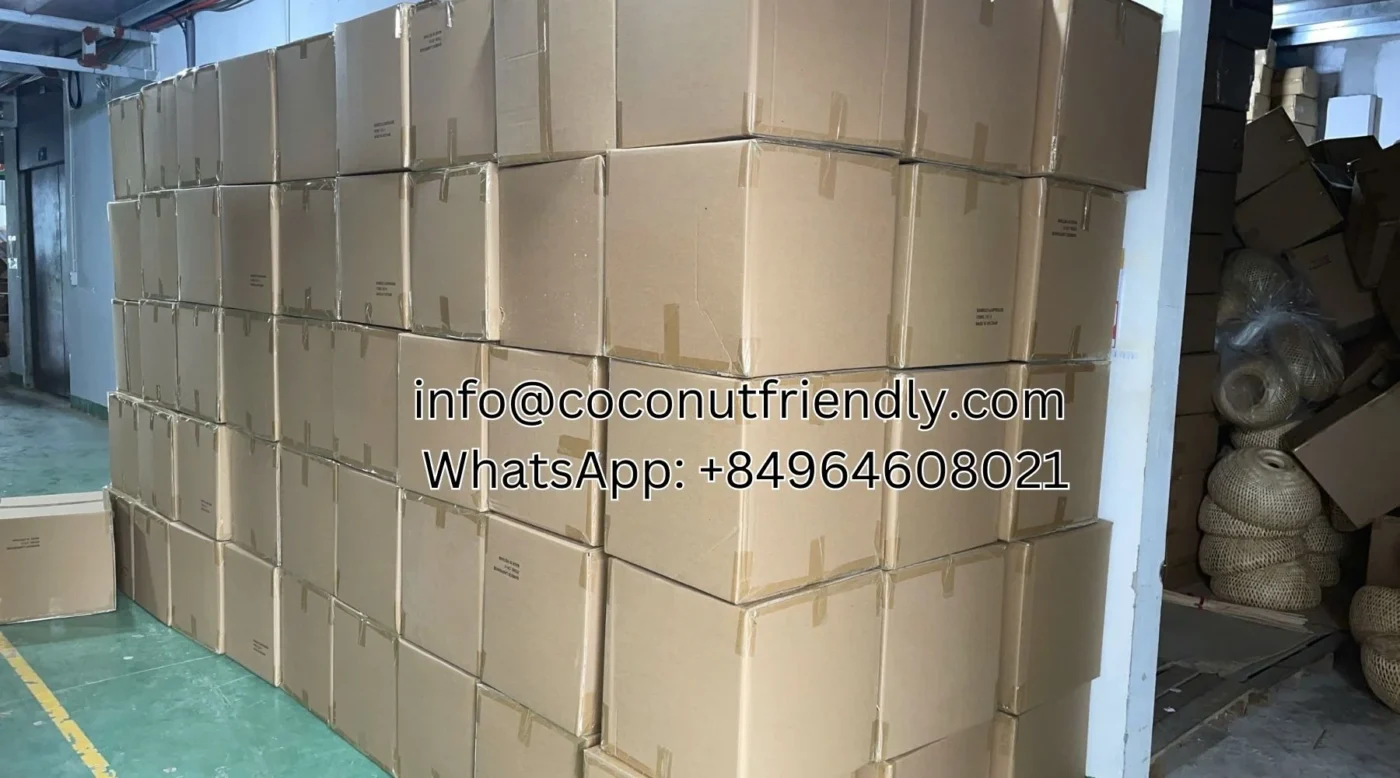
Professional logistics for handmade souvenirs require palletization as a non-negotiable rule. Bulk orders must be elevated 15–20 cm above ground and positioned at least 30 cm away from walls. This spacing ensures airflow and prevents moisture accumulation zones.
Moreover, Coconut Friendly’s warehouse audits show that palletized shell inlay products retain lustre up to 40% longer during long storage cycles compared to ground-stored inventory. Therefore, this practice directly preserves wholesale value.
4. Humidity Mapping: Optimal Placement Within the Warehouse
Not all warehouse zones behave the same. Even within a single space, humidity and temperature can fluctuate dramatically. Therefore, storing Mother of Pearl in bulk requires humidity mapping, not guesswork.
Areas near loading doors experience frequent thermal shifts. Meanwhile, zones close to air conditioners or heaters create localized dryness or condensation. These fluctuations cause thermal shock, leading to shell detachment or surface dulling over time.
The optimal placement for bulk nacre products is a stable central zone, away from airflow turbulence. Additionally, maintaining humidity between 45–60% ensures nacre retains its natural oils and iridescence.
Coconut Friendly integrates digital hygrometers across storage zones, allowing warehouse teams to reposition inventory strategically. As a result, protecting shell inlay products becomes proactive rather than reactive.
5. Moisture Control Mastery: Using Silica Gel and Industrial Desiccants
Finally, even with perfect placement, moisture control inside sealed crates remains essential. This is where industrial desiccants become a powerful safeguard in storing Mother of Pearl in bulk.
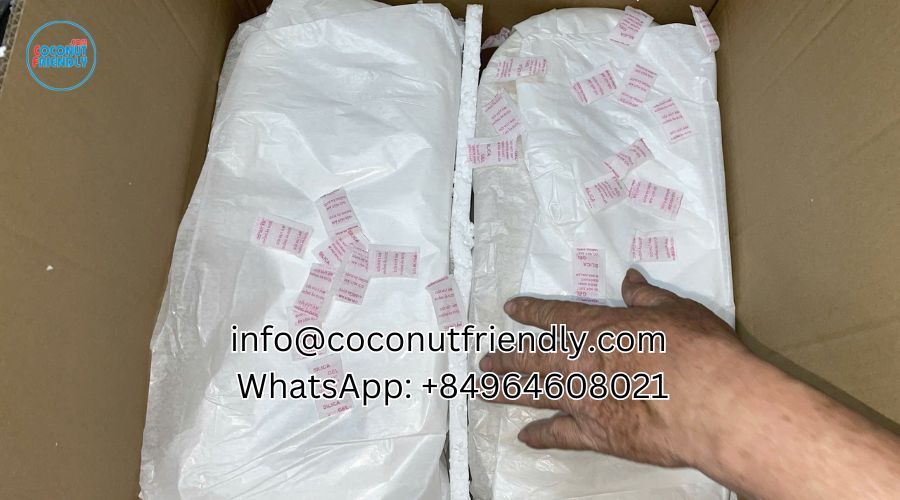
Unlike small retail silica packets, industrial desiccants are designed for large enclosed volumes. When placed at all four corners of a crate, they actively absorb residual humidity without over-drying the environment. Consequently, nacre remains glossy, not brittle.
However, desiccant use must be monitored. Overuse can strip natural moisture from shell layers, while underuse leaves humidity unchecked. Therefore, Coconut Friendly’s QC protocol includes scheduled desiccant replacement cycles, aligned with storage duration and climate conditions.
For wholesalers managing long-term inventory care for gift shops, this mastery ensures products exit storage in showroom-ready condition—no re-polishing, no discounting, no loss of perceived value.
Bulk Storage Comparison Table
| Storage Factor | Incorrect Practice | Professional Wholesale Standard |
|---|---|---|
| Packing material | Sealed plastic wrap | Kraft paper / non-woven fabric |
| Stacking method | Uniform vertical stacking | Staggered stacking with padding |
| Floor placement | Direct on concrete | Elevated pallet storage |
| Warehouse zone | Near doors or AC | Stable central humidity zone |
| Moisture control | Small retail silica | Industrial desiccants (monitored) |
Get in touch with us today to discover our full range of products or to discuss wholesale opportunities. We look forward to a successful partnership!
- Coconut Friendly
- Email: info@coconutfriendly.com
- Tel/WhatsApp: +84 964 608 021
Explore our Products Collection for more choices!
