

Blog, Wholesale Guide
Early Signs of Storage Damage in Mother of Pearl Souvenirs
Early Signs of Storage Damage are often subtle, silent, and frequently ignored until losses become visible. In mother of pearl souvenirs, storage-related damage rarely happens overnight. Instead, it develops slowly—through humidity, pressure, light exposure, and improper handling—quietly eroding product quality long before cracks or breakage appear. For retailers and wholesalers dealing with shell inlay products, recognizing these early indicators is not a technical luxury—it is a commercial necessity. Once visual defects reach the sales floor, perceived value collapses instantly, especially in the luxury gift segment.
Moreover, many storage-related issues are mistakenly blamed on production. In reality, a significant percentage of nacre deterioration originates inside warehouses, back rooms, or poorly controlled stock areas. Consequently, understanding early warning signs allows retailers to intervene before damage becomes irreversible. This guide breaks down the most critical early signs of storage damage in mother of pearl souvenirs—what they look like, why they happen, and how professional retailers should respond.
1. “Cloudy” Surfaces: The Loss of Natural Iridescent Lustre
One of the earliest and most overlooked signs of storage damage is surface cloudiness. At first glance, the mother of pearl may appear dusty or dull. However, upon closer inspection, cleaning does not restore its original iridescent shine. The surface looks muted, flat, and lifeless—especially under direct light.
This phenomenon is typically caused by prolonged exposure to excessive humidity or chemical residues in the storage environment. Specifically, moisture can penetrate micro-pores in the lacquer layer, triggering oxidation within the nacre structure. Over time, this disrupts the light-reflective layers that give mother of pearl its signature glow.
Furthermore, aggressive cleaning agents used in storage areas often accelerate this degradation. Even airborne chemicals—from insect repellents to cleaning sprays—can interact negatively with shell surfaces.
Immediate Response: Storage humidity levels should be audited without delay. A dehumidifier calibrated between 50–55% relative humidity is essential, and affected items should be isolated for further inspection before being returned to display.
2. Hairline Cracks: Stress Fractures in the Shell Inlay
Hairline cracks are fine, thread-like fractures running along or across shell inlay pieces. Unlike impact damage, these cracks often appear gradually and are difficult to detect unless viewed under angled lighting.
In most cases, these fractures result from thermal stress. Sudden temperature fluctuations—such as moving products between air-conditioned rooms and warmer storage zones—cause the shell and base material to expand and contract at different rates. Over time, internal stress builds until microscopic cracks appear.
Additionally, excessive stacking pressure contributes to this issue. When weight is unevenly distributed over extended periods, internal tension forms within the nacre layer, eventually manifesting as visible fractures.
Preventive Adjustment: Review stacking protocols and ensure products are stored away from direct airflow, heaters, or cooling vents. Temperature stability is just as critical as humidity control when storing shell inlay souvenirs.
3. “Edge Lifting”: The Beginning of Inlay Detachment
Edge lifting occurs when the perimeter of a shell inlay begins to rise slightly above the surrounding surface. When touched, these edges may feel sharp or uneven, indicating separation between the nacre and its base.
This condition signals adhesive degradation. Over time, fluctuations in moisture cause traditional adhesives to dry out, soften, or lose bonding strength. Once adhesion weakens, even minor vibrations during handling can worsen detachment.
Moreover, edge lifting is rarely an isolated issue. If one piece shows lifting, others in the same batch are often affected to varying degrees—especially if stored under identical conditions.
Corrective Measure: Affected products should be removed from circulation immediately and grouped for technical evaluation. Retailers should also reassess adhesive specifications with suppliers and review long-term storage conditions that may accelerate adhesive failure.
4. Yellowing or Discoloration: Signs of UV Exposure
Mother of pearl is prized for its luminous whiteness and subtle color play. When stored improperly, however, these qualities fade. White nacre may develop a yellowish tint, while colored shell loses vibrancy and depth.
The primary cause is ultraviolet exposure. Direct sunlight or prolonged exposure to high-intensity artificial lighting alters the protein structure within nacre, leading to irreversible color changes. Unlike surface dirt, this discoloration cannot be polished away.
Additionally, UV damage often works in tandem with heat, compounding material stress and accelerating overall deterioration.
Operational Recommendation: Storage areas should be shielded from natural light using curtains, UV-filter films, or enclosed shelving. Products should never be stored near windows or beneath high-output fluorescent fixtures.
5. The “Tapping Sound” Test: Identifying Internal Delamination
One of the most reliable diagnostic techniques used by experienced artisans is the tapping sound test. When gently tapped with a fingertip, a healthy inlay produces a crisp, solid sound. A hollow or dull tone, however, indicates internal delamination.
This hollow sound means air pockets have formed between the shell and base material—often due to prolonged humidity imbalance. As materials expand and contract at different rates, bonding layers weaken internally before surface defects become visible.
Alarmingly, products with internal delamination may look flawless externally while being structurally compromised. Once sold, these items are highly susceptible to post-purchase failure.
Risk Mitigation Action: Any product producing a hollow sound should be quarantined immediately. A full batch inspection is recommended, followed by supplier consultation and potential warranty intervention.
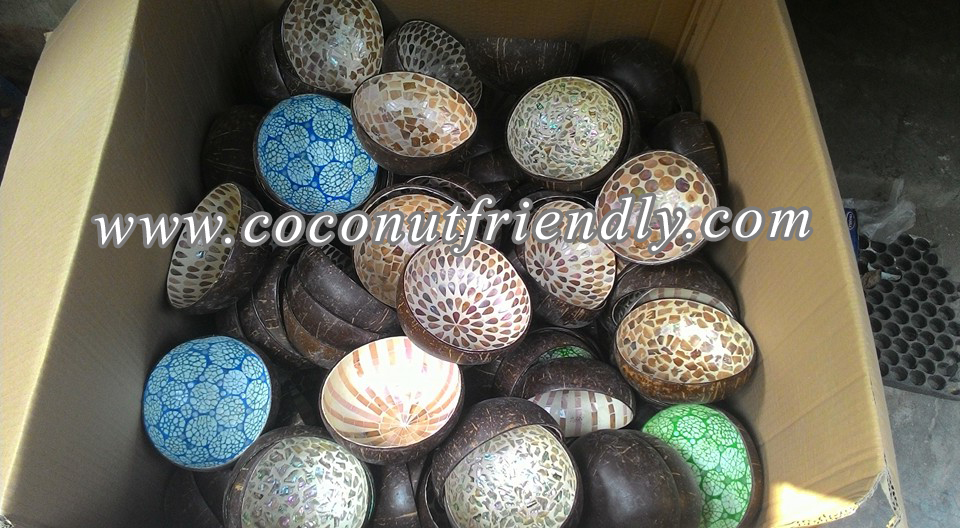
Storage Damage Indicators vs. Root Causes
| Visual Sign | Likely Cause | Risk Level | Recommended Focus |
|---|---|---|---|
| Cloudy surface | High humidity, chemical exposure | Medium | Humidity control |
| Hairline cracks | Thermal stress, stacking pressure | High | Temperature stability |
| Edge lifting | Adhesive degradation | High | QC & handling |
| Yellowing | UV exposure | Medium | Light management |
| Hollow sound | Internal delamination | Critical | Batch inspection |
Get in touch with us today to discover our full range of products or to discuss wholesale opportunities. We look forward to a successful partnership!
- Coconut Friendly
- Email: info@coconutfriendly.com
- Tel/WhatsApp: +84 964 608 021
Explore our Products Collection for more choices!
